If Windows Vista is the only operating system on your computer, you should be using NTFS—no question. The only compelling reason to use another filesystem is if you. Do you know how to convert RAW to NTFS when file system is RAW on an external hard drive? Try to recover RAW partition to NTFS now.

How to Convert RAW to NTFS in Windows 7/8/1. External Hard Drive.
Microsoft introduced the new exFAT file system with Vista SP1. Extended File Allocation Table (exFAT) is the successor to the old FAT32 file system. What are the. If you have ever tried to format a USB thumb drive or memory stick, you may have noticed that the only file system options you have are FAT and FAT32. NTFS Data Recovery Info and Recovery Software. All about NTFS & FAT File Systems. Windows 10 includes a built in utility known as Disk Management that can be used to partition and format a hard drive. To partition and format the drive with Disk.
Summary: Have you ever encountered this problem: file system is RAW how to fix it? If you have experienced this issue, don't be panic. This post will offer some effective methods to recover files from the RAW partition and then convert RAW to NTFS in Windows 7/8/1.
I don’t care for what is inside (only one word file) but I just want to be able to use it again. Is there anyway I can format the HDD and make it usable again? Do you know what RAW is? Generally speaking, RAW refers to a file system which is not formatted by NT file system, such as NTFS and FAT.
Actually, RAW issue is very common and it often occurs on many storage devices, such as hard disk, external hard drive, USB flash drive, SD card and more. If no file system exists on a device, there can be no files or folders on this device, namely RAW partition can't be used to store data before it is formatted.


In a word, once your disk becomes RAW, it is not allowed to access the target partition. The following figure shows you RAW drive in Disk Management. If your partition adopts NTFS file system before, but now it becomes RAW in Windows 7/8/1. Usually, some files or folders are saved on your external hard drive or other devices.
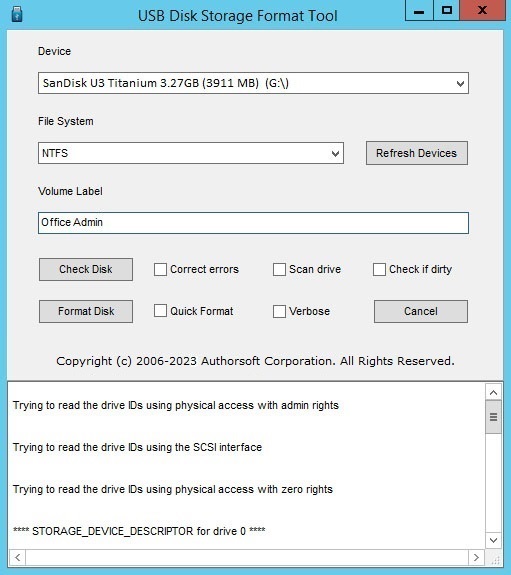
USB Disk Storage Format Tool 5.3- 100% Freeware, free for everyone! Download Now (550 KB) - 100% Freeware. Free download, free for use. USB flash drives hold.
In this case, you may ask: why file system is RAW? What should you do to convert RAW to NTFS or get data back from this RAW partition? Please keep reading to find the answers.
In general, the causes for this issue can be various in Windows 7/8/1. If your hard drive turns RAW file system due to virus attack, it is possible that some parameters and information are changed/deleted.
Partition table damage: this reason is very common. If partition table is damaged, the whole hard disk probably becomes RAW since Windows identifies partitions by the partition table. Bad sectors: perhaps there are some bad sectors on your external hard drive, and then RAW issue happens. Operating system reinstallation: it is likely that your disk is RAW after OS reinstallation.
This is because the OS doesn’t update in time, then Windows doesn't support the file system. File system structural damage. Physically damage on hard drive. Unexpected power outage when using the computer. More other unknown factors. And then due to different causes, the solutions to convert RAW to NTFS are also different. In this post, I will introduce you how to fix RAW hard drive to NTFS in different cases.
Once partition table on your external hard drive gets corrupted or damaged, Windows will fail to read this disk for any reason, and it reports your disk as RAW. Although the data is still there, the RAW partition is unable to be accessed. In this case, data recovery should be the first thing in Windows 7/8/1. Fortunately, Mini. Tool Partition Wizard has an ability to recover RAW partition data. As a piece of third- party software, it is reliable and professional to manage your disk and partition.
Moreover, this partition software is compatible with some operating systems including Windows Vista/XP/7/8/8. Among powerful features of Mini.
Tool Partition Wizard, a feature called . Its Free Edition can only be used to scan lost partitions but not to recover partitions. Then, go to its main interface. You can also select the target disk, and click . From the following figure, you know Mini.
Tool Partition Wizard provides three scanning range settings. Full Disk: This mode is suitable to scan the entire disk. Unallocated Space: It only scans the free space on your selected disk. Specified Range: It is useful to scan specified sectors. Between them, the former can restore lost/deleted partitions which are continuous and the latter is designed to scan each sector of the scanning range you have chosen. When double clicking on this partition which is in RAW file system in Disk Management, and then all partition data will be displayed. Please check whether the files are your needs.
Here you can preview all RAW partitions will be converted to NTFS. Finally, hit . So please use Mini. Tool Partition Wizard to assign a drive letter with .
If you are also having the same issue, download Mini. Tool Partition Wizard Free Edition to check whether your partitions can be found or directly purchase it’s Professional Edition to do partition recovery to convert RAW to NTFS file system. Here maybe you ask: there are many files saved on your disk , but formatting will lead to data loss, so could the partition data be recovered firstly and then start to format? Here Mini. Tool Solution Ltd. Otherwise, the chance of data recovery is slim.
And then select . Then follow the pop- up wizard to recover data from RAW drive. Here is a related article Recover Data from RAW File System, RAW Partition and RAW Drive Efficiently. Follow the four ways below now. Usually, In Disk Management, you probably right click on the RAW drive and select . Sometimes you can do this successfully, however, sometimes an error message saying . If you right click it to format your RAW partition on external hard drive, sometimes you may fail with .
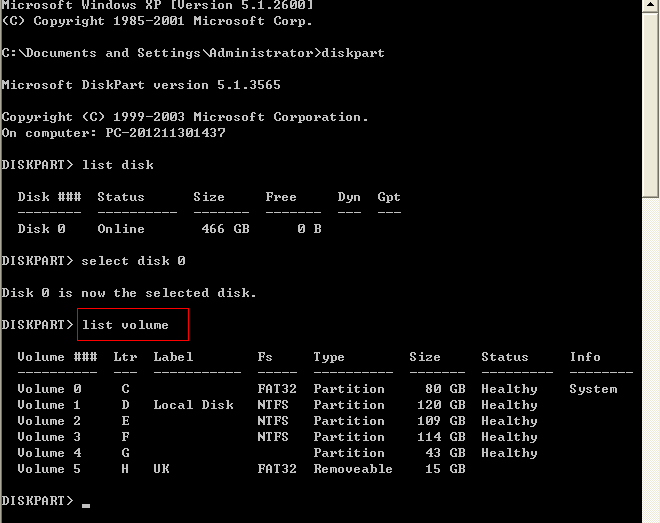
Try to convert RAW to NTFS with CMD. Run Command Prompt as Administrator, and then enter the following commands (each ends up with Enter key.) to do external hard drive raw format fix. This partition manager can do the conversion between NTFS and FAT3. In the main interface of Partition Wizard, you will find the RAW drive shows . Please click . During the process, it is allowed to set partition label for the target partition. Here partition I also shows .
Usually when opening diskpart to start the check, . Sometimes in Disk Management, your partition shows RAW file system. But in fact, it is not recognized as RAW by diskpart due to some unknown reasons.
So you can try this solution in Windows 7/8/1. When launching it to the main interface, perhaps your partition which shows RAW in Disk Management shows NTFS files system here.
At this time, you can reboot your computer. If the partition is still normal in Partition Wizard, it is most likely the key file system information is corrupted. So please check and fix file system now. Here select . And then click . If you are interested in this tool, please download it now for a free try. If all ways are not working, it is most likely that your external hard drive is damaged physically.
So in this case, you only need to replace this disk in Windows 7/8/1. Once your external hard drive becomes RAW, the most important thing should be to convert RAW to NTFS.
This post introduces you three solutions in detail and three possible methods to get RAW data back and recover RAW partition to NTFS. Please try them according to your need. Hope you can solve RAW issue successfully. If you have any suggestion or question, welcome to leave a comment below or email us via support@minitool.
How to Format a Hard Drive (Windows 1. Vista, XP)You need to format a hard drive if you plan on using it in Windows. To format a hard drive means to delete any information on the drive and to set up a file system so your operating system can read data from, and write data to, the drive. As complicated as that might sound, it's not really difficult to format a hard drive in any version of Windows. This ability is a very basic function that all operating systems have, and Windows makes it pretty easy. Important: If the hard drive you want to format has never been used, or was just wiped clean, it must first be partitioned.
See How to Partition a Hard Drive in Windows for instructions. Once partitioned, return to this page for help formatting the drive. Time Required: The time it takes to format a hard drive in Windows depends almost entirely on the drive's size, but your computer's overall speed plays a part too. Follow the easy steps below to format a hard drive in Windows 1. Windows 8, Windows 7, Windows Vista, or Windows XP: How to Format a Hard Drive in Windows. Optional Walkthrough: If you'd prefer a screenshot- based tutorial, skip the instructions below and try my Step by Step Guide to Formatting a Hard Drive in Windows instead!
Open Disk Management, the hard drive manager included with all versions of Windows. Note: In Windows 1. Windows 8, the Power User Menu gives you the quickest access to Disk Management. You can also open Disk Management from the Command Prompt in any version of Windows but opening it via Computer Management is probably easier unless you're really quick with commands. See What Version of Windows Do I Have? If so, it means you still need to partition the drive. See How to Partition a Hard Drive in Windows and then return here to continue.
Note: Formatting the C drive, or whatever letter happens to identify the drive that Windows is installed on, can not be done from Disk Management.. See How to Format C for instructions on how to format your primary drive. Once located, right- click or tap- and- hold on the drive and choose Format.. Once started, you can't stop a format without causing problems. So.. If you're formatting a drive that has data on it, double- check that it's the correct drive by looking at the drive letter and then checking in File Explorer or Windows Explorer (depending on your version of Windows) that it is, in fact, the correct drive.
If you're formatting a new drive, the drive letter assigned should be unfamiliar to you and the File System will probably be listed as RAW. In the Volume label: textbox, either give a name to the drive or leave the name as is. If this is a new drive, Windows will assign the volume label. New Volume. I recommend giving a name to the drive so it's easier to identify in the future. For example, if you're planning on using this drive to store movies, name the volume Movies.
For File system: choose NTFS unless you have a specific need to choose another file system. NTFS is always the best file system option to use in Windows unless you have a specific need to choose FAT3. Other FAT file systems are only available as options on drives 2 GB and smaller. Set the Allocation unit size: set to Default unless there's a specific need to customize it.
There are very few reasons to change this. In Windows 1. 0, 8, and 7, the Perform a quick format option is checked by default but I recommend unchecking the box so a . A quick format skips the bad sector search and basic data sanitization. Windows XP: In a standard format, each sector is checked for errors. The quick format skips this check. Automatic data wiping during the format process isn't available in Windows XP. The Enable file and folder compression option is unchecked by default and I recommend keeping it that way.
Note: File and folder compression can be enabled to save on disk space and you're welcome to enable it if you think you may benefit from it. However, most drives are so large today that the tradeoff between the saved space and lower drive performance probably aren't worth it. Tap or click OK at the bottom of the window.
Tap or click OK to the . Back up any data you want to to keep before formatting. Do you want to continue? You can keep track of the drive format by watching the Formatting: xx% progress in the Status field. Note: Formatting a hard drive in Windows could take a very long time if the drive is large and/or slow. A small 2 GB hard drive might only take several seconds to format while a 2 TB drive could take considerably longer depending on the speed of the hard drive and the computer as a whole. The format is complete when the Status changes to Healthy, which will happen a few seconds after the format counter reaches 1.
Windows does not otherwise notify you that the drive format is complete. That's it! You've just formatted or reformatted, your hard drive and you can now use the drive to store files, install programs, backup data..
Depending on your version of Windows, and the type of format, it's possible the data is still there, hidden from Windows and other operating systems but still accessible in certain situations. See How to Wipe a Hard Drive for instructions on truly removing all the information on a hard drive and my Wipe vs Shred vs Delete vs Erase: What's the Difference? See How to Completely Erase a Hard Drive for more on these other methods. More on Formatting Hard Drives in Windows. If you want to format your hard drive so you can install Windows again from scratch, please know that your hard drive will be automatically formatted as part of that process. See How to Clean Install Windows for more on that. Not happy with the drive letter that Windows assigned during the partitioning process?
You're welcome to change it at any time! See How to Change Drive Letters in Windows to see how. You can also format a hard drive via Command Prompt using the format command.
See my Format Command: Examples, Switches, & More for details on how to do that.


/https%3A%2F%2Fwww.notebookcheck.net%2Ffileadmin%2F_migrated%2Fpics%2FWindowsVistaHomePremium_web_01.jpg)
/http%3A%2F%2Fwww.intrepidwebs.com%2Fwp-content%2Fuploads%2F2012%2F10%2FInstallation-of-Windows-Vista.jpg)
/http%3A%2F%2Faff.bstatic.com%2Fimages%2Fhotel%2Fmax500%2F574%2F57482877.jpg)
/http%3A%2F%2Fhelpix.ru%2Fblackberry%2F4g_playbook_wi-fi_lte%2Fpic%2F02_p81.jpg)